Wednesday, February 17, 2016

Secret of the Andes, Newbery Winner 1953


This book probably counts as my literary nemesis. It's only 138 stinkin' pages, yet I kept getting halfway through and WALKING AWAY. And I'm not talking about walking away for a week or two - no, try months or years. This was going to be the third ever book I reviewed for this blog because it was bite-sized and about Latin America - my favorite. But here we are at book number 60 - four years later.

Definitely my nemesis.

There's not really much I can say about this book outside of the fact that nothing really happens and it takes its own sweet time not happening. I like the setting described, from the mountains to the salt mines. The people are interesting (and the llamas too!). The themes of family and home are timeless and handled surprisingly well. Internal conflict is handled well....

Wait! It sounds like a good book! I know it does - but stories need five things: plot, character, conflict, theme, and setting. This story has very little in the way of plot. Characters visit salt mines (uneventfully), characters return home, character learns things (OFF PAGE), character goes to Cuzco, character returns to the mountains, and then well that's it.

Way too much of the 'action' in this book is told to us after the fact. I want to like this book but unfortunately it is just boring.

Sunday, February 7, 2016

The Complete 2016 Newbery Read-Through

It is my ambition to one day read the Newbery winner before it is announced... this was not that year. Though I did manage to get two of the three honors.

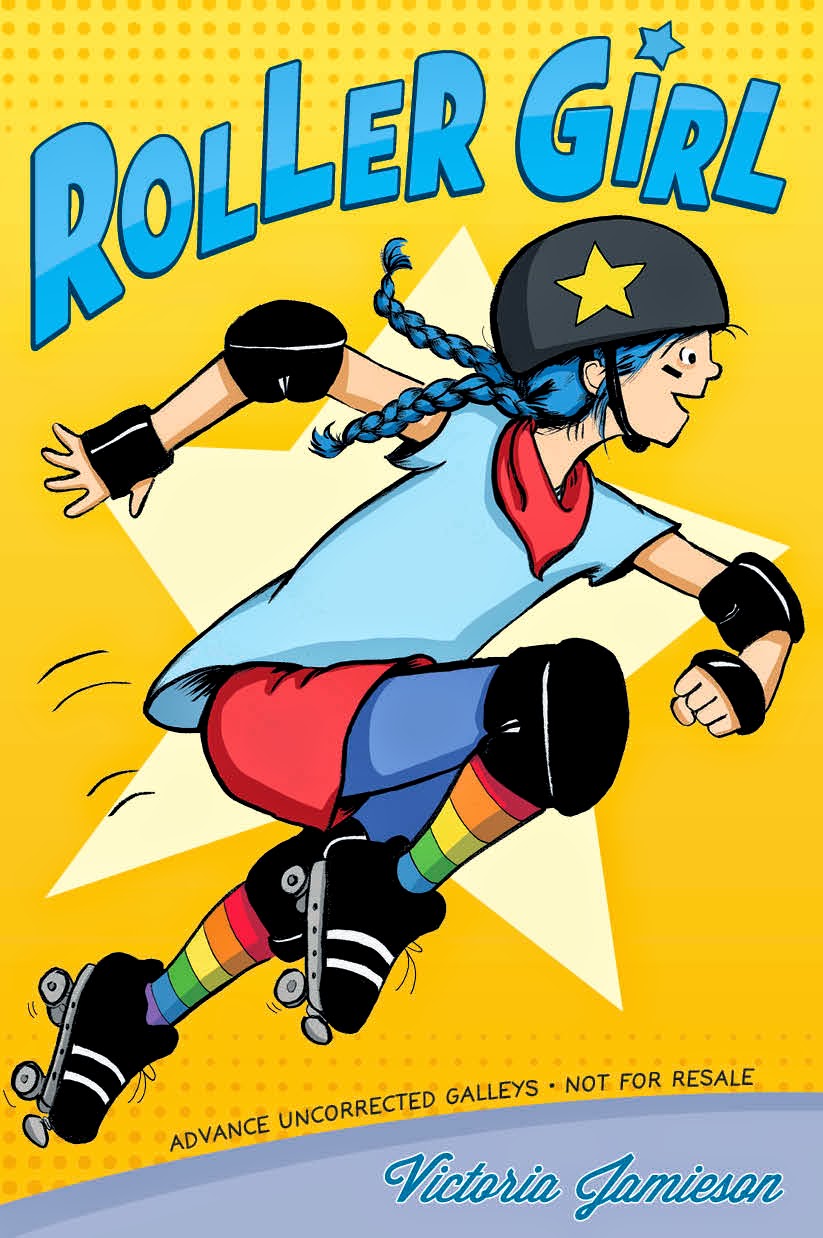
Roller Girl by Victoria Jamieson

Once more we get a graphic novel. Probably not one I would have picked up, but quite good all the same. When was the last time you read a book about roller derby? I would venture sometime between never and never ever for most of you - yet this book provides an introduction to that tough sport. More than that it is an interesting look at what happens as we grow older and perhaps move apart from the people who had been our best friends. It also explores the phenomenon that hits in the early teens where you feel so many things that you end up not knowing what they mean. It explores our relationships with family, the importance of trust (and second chances), the need for acceptance, the power of hard work, and the joys of friendships. The ending is satisfying in not catering to a need for the perfect solution but rather mirroring life and that it can be confusing and difficult, but ultimately worth living.

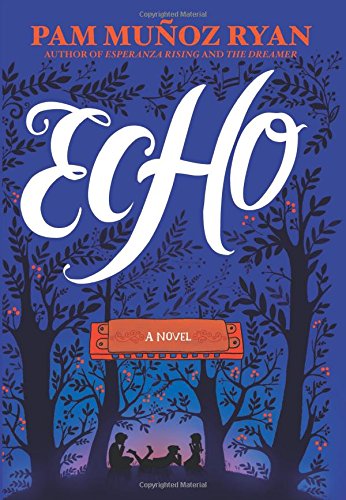
Echo by Pam Muñoz Ryan

I adored Echo I read it several months ago and was very excited that it received an Honor. This book looks very intimidating but it is tempered by the fact that there are really four stories in here - three of which take up the bulk of the book. The story revolves around a harmonica with extraordinary tone and the various people that own it. In the first story, sometime centuries ago, we meet a young German boy lost in the forest, he discovers three sisters who have been trapped by a curse but by saving three lives they will be freed, they imbue a harmonica with their breath and the boy goes on his way.
The next story is about another young German boy - this time just before WWII - who has a large and very noticeable birthmark. His father and uncle work in a harmonica factory where he becomes the youngest apprentice they've ever had. As the government enacts more and harsher laws it becomes evident that they will need to flee...
We next find the harmonica in America. Where a young orphan and his brother are desperate to find a home where they can stay together. They find temporary asylum with a stern woman forced to take in children to keep her inheritance. But her lawyers are constantly looking for a loophole that will allow her to take the boys back to the orphanage where they will certainly be split up. When they find out that the paperwork has gone through they make the daring decision to strike out on their own...
The next section focuses on a young Latina girl in California near the end of WWII. When her family moves to a new home she is shocked to discover that she must attend a different school because of her race. She also discovers that her father moved here to continue his relative's job of caring for the house of a Japanese-American businessman who has been moved into an interment camp. She struggles with concerns about the fact that she is forced to attend a substandard school and whether or not there are dangerous items hidden in the house her father is caring for...
In the end the stories weave together in a beautiful fashion. This book is a love story to the power of music and the inherent goodness people possess and must call upon in times of struggle. 

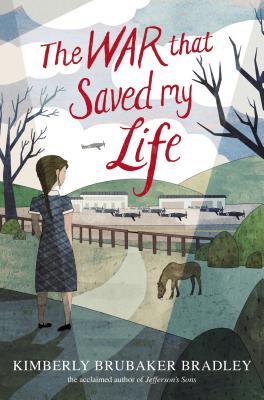
The War That Saved My Life by Kimberly Brubaker Bradley

I very much expected this book to win. It is wonderfully written and shows deep, deep emotions, on top of that it is historical fiction and seemed very much the write dose of that elusive Literature with a capital L.
It begins in London where Ada and her younger brother live with an emotionally abusive mother. Ada gets the worst of it because a club foot makes it painful for her to walk and her mother refuses to let her leave the house. When German planes threaten to bomb England, Ada's brother is scheduled to be sent to the countryside. Desperate to stay with him Ada escapes the house and gets on the train. They are taken in by Susan Smith a stern but kind woman. She is the first to show Ada what love can truly be and Ada comes to love Susan in return. This is not to say that it is an easy journey. The author heartbreakingly captures the struggles Ada has with trust and the difficulties in accepting that she has worth and intelligence. 
Overall a solidly historical novel set in WWII England. This book hits emotions perfectly and the character development was spot-on. Even the a-little-to-perfect ending sat okay with me. BECAUSE I NEEDED THAT HAPPY ENDING!!!

Which brings us to.....

Last Stop on Market Street by Matt de la Peña

If you're thinking, "That looks like a picture book," you'd be correct. This charming book chronicles a boys journey with his grandmother from church to a soup kitchen as they ride the bus. The grandmother points out the every day beauty around them as they go. I love this book - I really do. That being said, I disagree with the decision to crown it the winner. The Newbery is for writing and this book relies too much on the pictures to carry the story. (As opposed to Good Masters... or William Blake's Inn which are both heavily illustrated but most definitely intrenched in written language.) I have a hard time accepting this book as the winner in a year where books like Echo and The War That Saved My Life were on the table. For my money either of those two was a solid choice - TWTSML I may have ranked a little higher based on the fact that it's writing was a tad bit tighter when it came to character development.

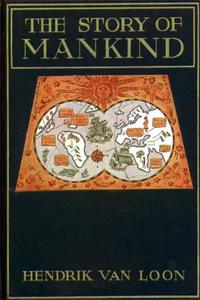
The Story of Mankind, Newbery Winner 1922


Here it is. The very first Newbery winner. I must say that, although not a real page turner, this book was much better than I expected it to be. I started reading it a few years back and the book is nicely illustrated but in order that I might just be done with it I have gone ahead and listened to the audio book. It was still a bit dry so I cranked up the speed and listened to it at 1.5X in order that I could just be done with the whole affair. So I think a simple overview ought to suffice.

The Good: The author does seem to put forth effort into being unbiased while looking at historical events. Though not always perfect at this he does note areas where he had to fight his personal bias in order to tell both sides of a story.

The Bad: For claiming to be the condensed story of mankind this book is awfully Eurocentric. The author having been raised in Europe and schooled in America this can hardly be surprising. Still he did spend probably 60 of the 67 chapters talking about events in Europe. One chapter is dedicated to Egypt, one to the Far East (only to discuss religion), two to the Middle East, and the others to the United States.  The text also shows its age quite often when discussing People of Color and non-Judeo-Christian religions, on the same note the author is not unkind he simply uses phrases and cites ideas that were common one-hundred years ago but are no longer considered appropriate.

The Ugly: Actually, considering the age of the book does explain many of its shortcomings. Would I recommend it to children? No. But mostly because I just didn't find it all that enjoyable. It was a fair sight better than I expected, but by no means brilliant. I think the only reason this book survives at all today is its accomplishment of being the first book awarded with The John Newbery Medal.

Saturday, August 22, 2015

The White Stag, Newbery Winner 1938


After a nearly six month absence (yipes!) I'm back. This time I dug into that oddball decade filled with books that are okay.... but lack a certain kid-appeal: the 30s.

I really enjoyed The White Stag with its condensed epic saga and gorgeous illustrations, but it didn't really feel like timeless children's literature. The Hun invasion is bloody, the peaceful Magyars are looked at with contempt by a character who is very well respected, and we get possibly the most depressing love story in children's literature.

However - this was an extraordinary peek into the folklore of Hungary (as noted in the author's introduction), how interesting that what historians and geneticists consider as the origin of modern Hungary is basically the opposite of what is found in folklore. But the true connections are just as fascinating, showing that Hunnic DNA in fact is found within the Magyars suggesting that the 'brother tribes' bit in the story is at least partially true. (I've not done a whole lot of research so perhaps I muddied the waters here, don't quote me.)

I'm having trouble coming up with things to say about this book, seeing as it's only 94 pages, and copiously illustrated to boot. Overall a good read that skews middle school boy in target demographic.

Seriously though. Gorgeous illustrations.

Friday, March 6, 2015

The Complete 2015 Newbery Read-through

I was able to read through all of this year's books in two days. Then I just let it sit and sit... and sit. I had other things to do, but I didn't want too much time to slip by so, without further ado, my thoughts on the Newbery honorees and winner for 2015.

El Deafo by Cece Bell

This fun and engaging book is the first graphic novel to be honored by the American Library Association with a Newbery! Let me go ahead and climb on a soapbox and say that I completely approve of the growing acceptance of graphic novels as being real literature. I think that if students are learning with them, and inclined to pick them (which many students are) then let's write more stories about a wide variety of topics. I'm an artsy-fartsy person, I love me some long books with pictures - most of the time the easiest way to get this is through a graphic novel, and there are just as many wonderful art styles to be found on this shelf as the picture books shelf. In NO way though, should this be considered a 'stepping stone' to 'real books'. *shudder* They ARE REAL BOOKS!!! I can find plenty of graphic novels with a higher word count and higher reading level then say.... The Old Man and the Sea, but one certainly can't hold one against the other and say, "ah, this tome here has been bestowed with all the qualities of bookitude, but, alas, it's brethren dost lack necessary qualities because of its frivolities."
Actually I don't use bar soap... I had to use a soupbox instead.

Although calling it a graphic novel might be misleading because it isn't a novel at all, rather it is a memoir focused on the author's struggle to find friends and navigate through her school years in the 1970s. The catch? She is deaf; she uses hearing aids both at home and at school. Her school aid is particularly cumbersome, being a large box that must be worn like a backpack (except frontwards). She makes some friends, but they either aren't great people or don't understand how to act around her. Not that she was particularly forthcoming with information. When she finally finds a great friend it all seems perfect - until an accident threatens everything.
There are a couple of inappropriate moments, but normal pre-pubescent inappropriateness. Overall the book is the right mixture of serious and humorous to keep a person from feeling down, but to convey the loneliness the author felt at times. As with any graphic novel memoir whatever the illustrations are an important consideration, that may be where this book falls shortest. I like the idea of rabbits for characters in a book focused so much on ears, but often-times the pictures simply remind me of Arthur. I think that some readers best suited for the story might be turned off by the 'cute' pictures.
Overall a great book to choose for many reasons:
1. Long may the graphic novel reign!
2. Bring on the adolescent memoirs.
3. The addition of some ability diversity into the line-up. (I've not read many of the Honor books, but between them and the winners only a handful of primary characters with physical disabilities come to mind and none that I recall being deaf.

Brown Girl Dreaming by Jacqueline Woodson

Look at all those stickers. It can't win too many more or they'll have to put some on back.

Another memoir! This is the book that I was certain would win based on all my very complex calculations. This is a book written in verse, so it's length is semi-deceptive. There are some long poems and some short ones, but it is pretty much all in blank verse. I'm not usually a big fan of memoirs, but this book was beautiful, I can see why it was a frontrunner pretty much since publication. Jacqueline talks about never quite fitting in with other kids, and always wondering where home really was.
The descriptions in this book are quite vivid without being drawn out or over-rendered. I've never spent much time in the South - nor do I ever, ever, ever, ever, ever want to. One week every decade or so has serviced me pretty well up to now. But the descriptions in the poems are full and palpable. I could almost feel the humidity hanging in the air, smell the warm sticky night air, and hear the crazy chorus of crickets sounding for miles around.
Meanwhile in my neck of the woods... I'm lucky winter is my favorite.

I love that our protagonist finally discovers that she can take control through words. That too was my feeling, I loved the escape of reading - but adored the command of writing.
Totally deserved the award for a couple reasons:
1. Diversity, the author herself notes that, growing up, she was very excited to find a book with people that reminded her of herself. We just need to add fuel to the fire until is no longer something to search for, but rather something that just sort of happens.
2. Memoir? Poetry? Both great additions to the normal fictional prose format of the Newbery.


Which brings us to....


THE WINNER OF THE 2015 NEWBERY AWARD


This book has it all! A young male protagonist. Sibling Rivalry. Young Love. Parental Struggles. Basketball. Poetry... Excuse me. BASKETBALL AND POETRY?!?!
I heard about this book winning and I questioned the sanity of the award committee. I shook my head and thought, "oh no, looks like they're trying to be cool." 
I read the description and didn't feel any better. Surely this was some sort of stunt to bring in those 'reluctant' readers.
Then I started the book. And finished the book. And immediately started looking for the book's next reader. I've never been so compelled to push a book into someone's had and say, make sure people know. Know that they should read this book and find other people to read it.
The last book I read about sports was... spvcsfateeetgbsdfb, yeah - nothing comes to mind (unless we are counting bullfighting) - but basketball? I like basketball, I really do, as a very casual watcher. But I know almost nothing about it other than it is a billion times more interesting than football. Also I can make the occasional basket. Well then. I can see basketball pulling the kids in, but poetry? That can be a tough initial sell for the kind of people I've known who play b-ball (do we still abbreviate it that way?), many of whom don't actually read an abundance of books. But the poems in this book are short, catchy, and come in a variety of styles.
GAH!!! I want to say more, but feel that I'd give too much away. Just trust me when I say that this book is totally worth it, go buy it, borrow it, or beg it off a friend, but please, please, please just give it a chance.

Why this book totally earned its award:
1. High-interest topic - Basketball is a very popular sport in most of the country, this book has a boy holding a basketball on the cover and is named for a common maneuver. 
2. Diversity - We need brown boys just as badly as brown girls.
3. Boys - Boys are notoriously harder to sell on the idea of reading a novel. But I think a great many would bite on this book. It has officially unseated Holes as the 'boy-appeal' winner.
4. Subject - The subjects covered in this book are heavy and handled in a wonderful manner. They all come together in a beautiful, believable way.
5. Poetry - The poetry is tough and different, there are several varieties throughout the book, but they all play their part correctly. And since poetry is actually quite a handy tool for reading development this tag-teams with reason #1 to do double duty for struggling readers.

Overall, I'd say that I was wrong. Utterly and completely. The award committee was well within their right minds to choose this book as the award winner.


Friday, February 20, 2015

The Wheel on the School, Newbery Winner 1955


This book has been a pleasant surprise. First off, it is from the 50's which haven't been getting too much love from me. My first impression glancing it over was that it reminded me of Dobry (bad.bad.bad.). And lastly, Maurice Sendak is okay, I like his art but it is rarely associated with works that I love.
And I'm actually not a fan of his most famous book Where the Wild Things Are.
And you'll just have to deal with it.

Anywhoozles... this book takes place in the booming city small town tiny fishing village of Shora in the Netherlands. How small? There are six children enrolled in the local school, to be fair though the next town is close enough for children and elderly men to walk to and back in a day. 
The sole girl in the school writes an essay about storks and reads it in school one day. In her essay she mentions that other towns have storks but there aren't any in Shora. This prompts the teacher to challenge the students to think about why there aren't any storks. (That's right student-guided learning! Happy dance time!!!)

The students decide that the problem is that Shora's roofs are all too steep and they should put a wheel on the school roof in hopes that storks will build a nest, the rest of the novel outlines the various searches for a wagon wheel. The students need to work in various ways to try and solve their problem, I love that this book encourages the learning process - identify a problem, look for solutions to the problem, test solutions, and review the results.

Another cool thing is that there is an intergenerational dimension to this book. The children, in their search for a wheel, begin to really talk to the adults around them, especially the older people that they usually avoided. This leads to them discovering some amazing things and finding their greatest helpers.

All in all this was a sweet book, with a moral that is carried forth through the text that if enough people begin wondering about something, then eventually something will come of it. I think that I will be looking for more books by Meindert DeJong!

Tuesday, February 10, 2015

The Voyages of Doctor Dolittle, Newbery Winner 1923


Now this is a book I'd read before - I believe I was in high school, though Goodreads gives me a date partway through college. Either way I grown a lot since reading it the first time - I've forgiven what some called a bowdlerization of the original text, but I now believe was a well-intentioned attempt to make the book more suitable for today's young readers. If you have the pressing need to know some of the edits they can be found in many places online - here's one that seems pretty thorough.
Now I haven't read any of the other books in this series, but I may because the best bits of the book were really great. However quite a bit of it seemed 'meh'. The author seems to have suffered from a flaw that I know I have manymanymanymany problems with in my own writing. Consistency. Characters are brought on the titular voyage only to not be mentioned at all for chapter after chapter. Things are brought up as seemingly important bits of plot and then NEVER MENTIONED AGAIN. The Law of Chekhov's Gun people, try to follow it!


Another tiny issue that I had was the fact that the text generally refers to Doctor Dolittle simply as 'The Doctor'. If you are a fellow Whovian you can probably understand how this messed with me. It also insulted vets... which means it insulted James Herriot, and that is basically unforgivable. But along with James Herriot it insulted he friend and co-worker, Tristan, who was portrayed on TV by Peter Davison.

Who happened to be The Doctor... so we've come full circle.

I think that even more frustrating was how... conveniently... things sometimes occurred. Polynesia (a fairly important character, after all she is the first teacher one has when learning to speak to animals) is introduced in concept on page 27. Doctor Dolittle wishes she were still with him, because she should really be the one to teach Tommy to speak with animals. Then on page 28,
"... I often wonder if she remained happy in Africa, and whether I shall ever see her funny old solemn face again. Good old Polynesia! A most extraordinary bird - well, well!"
Just at that moment we heard the noise of someone running behind us and, turning around, we saw Jip, the dog, rushing down the road after us as fast as his legs could bring him. He seemed very excited about something, and as soon as he came up to us he started barking and whining to the Doctor in a peculiar way. Then the Doctor, too, seemed to get all worked up and began talking and making queer signs to the dog.
At length he turned to me, his face shining with happiness. "Polynesia has come back!" he cried. "Imagine it! Jip says she has just arrived at the house. My! And it's been five years since I saw her..."

Sadly, I think that even with the edits this books age shows very clearly. Doctor Dolittle believes he is the only hope for a tribe living on a remote island. Polynesia points out they were doing fine before he arrived and they will do just fine without him. (Though quite a few of her previous remarks weren't so kind.) There are some other odd things, especially concerning Bumpo, that mean that the child who reads this should be well versed in reading a book in the context in which it was written. But I maintain that the editor did right with the changes, after all this is for children. If you asked my opinion about editing The Adventures of Huckleberry Finn I'd let you know that I'm against it, because it is meant for readers that ought to have a familiarity with race relations through history.


A disconcerting footnote...
Did this book, one that I was angry with for being 'censored', one that I hardly cared about anyway, inspire one of the characters in the book I'm writing? It really depends on when I first read it, but surely the odd coinkydinks would have been noteworthy if I had already written the character... Polynesia is a sassy, kinda bossy, very smart, and outrageously old parrot. There is a minor character, a beautiful bird named Miranda (which seems like an odd name for a Brazilian bird). 
My novel contains a sassy, kinda bossy, very smart, and outrageously old parrot named... Miranda (whom I outfitted with the name after going through a yearbook until something felt right...).