Monday, January 18, 2021

The 1940s... A Look Back


This time let's take a look at the 1940s- this seems to be the decade where the Newbery really started coming into its own. Here we find some of the first well-known titles and the writing style is much more readable to the modern mind. 

Books that I read longer ago I may wish to give a different number of stars to because in the early days I had a tendency to give books 5 stars no matter if I liked them or adored them.

Overall a decent decade, honestly I was probably most pleasantly surprised by this decade.

King of the Wind (1949) - 5 stars - This was a great story. My first written by Marguerite Henry, and I can't totally see why her books are so popular decades later.

Call It Courage (1941) - 4 stars - I would give this 5 stars now if I could, years later and I reflect back on the book fairly frequently. I loved it whole-heartedly and can see where kids that enjoyed Moana would enjoy this tale.

The Twenty-One Balloons (1948) - 5 stars - A fun little story that is so far outside the usual parameters of the usual Newbery winner that I can't help but love it. Quite frankly I'm astonished that a movie was never made!

Adam of the Road (1943) - 4 stars - A great story (and well researched!) about a boy and his dog. I'm a sucker for Medieval England and this book is no exception.

Rabbit Hill (1945) - 3 stars - A super cute story that might work great as a bedtime read aloud. I'm thinking most kids able to read it on their own are not going to be in to talking bunny stories.

Strawberry Girl (1946) - 3 stars - If you are into pioneer books this one is sure to be enjoyable - comes with the twist of having a feud thrown in.

Miss Hickory (1947) - 3 stars - Another doll book. Still has my money for the being the weirdest of any of the Newbery books, but it's a good weird.

The Matchlock Gun (1942) - 3 stars - A short but purportedly true story set during the French-American War. I don't really remember it very well but it also didn't take very long to read, if I'm ever inclined I can give it a quick reread.

Johnny Tremain (1944) - 1 star - Oof. I must have been really upset with this book. I don't really think it deserved just one lousy star, I'd probably be more inclined to give it 2 stars nowadays.

Daniel Boone (1940) - 1 star - One of four three out-of-print Newbery winners. I cannot recommend this book on any level. It is a bad biography, it is bad fiction, it is just not interesting at all.


Recommendation of the Decade


This decade is so full of good books that it is difficult to choose one to recommend. King of the Wind is such a very good book that even after reading 92 other books it remains in the top ten. I still pick up this book with a happy squeal when I come across it, saying, "This is a good one!" It also has a great film adaption for anyone that likes comparing books and movies.

Sunday, January 17, 2021

The 1930s... A Look Back

Alright, today let's take a peek at the 1930s - fun fact, every winner this decade was written by a woman. I'll tell you how I rated the books on Goodreads and which book I'd recommend.

Books that I read longer ago I may wish to give a different number of stars to because in the early days I had a tendency to give books 5 stars no matter if I liked them or adored them.

Overall this decade was very - meh. Another theme is that I'm not sure just how accurate any of it may be. Which may be a problem when discussing historical periods and cultures. I think Thimble Summer and Roller Skates escape this problem by virtue of being contemporary realistic fiction.


Caddie Woodlawn (1936) - 5 Stars - Good. But I really preferred the Little House books. I also probably couldn't recommend this to a child since it brings a lot of historical baggage with it.

The Cat Who Went to Heaven (1931) - 4 Stars - A rather nice little book. I like the morals even if I'm not sure about the accuracy... but it works really well as a fable if anything.

Invincible Louisa (1934) - 3 Stars - A great biography of Louisa May Alcott. I'm glad I read Little Women first as I think it really added to the overall experience of learning about her life.

The White Stag (1938) - 3 Stars - The story of two brothers used to explain the origins of the Huns and Maygars.  It is basically a beginners' epic with its heavy themes and short length.

Thimble Summer (1939) - 3 Stars - Early form Charlotte's Web. A series of loosely connected events on a farm. A young girl is the focus rather than her pig which opens us up to a wider variety of scenarios.

Young Fu of the Upper Yangtze (1933) - 3 Stars - A series of loosely connected events in China. The story of a boy and his series of unbelievable coincidences. Let's be honest - I recall nothing except selling snow.

Hitty: Her First Hundred Years (1930) - 2 Stars - A series of loosely connected events as told by a doll. Slooooooow trek through a doll's life. Oddly enough this one comes closest to kid appeal because when it's good it's very good. But all to often it isn't good.

Roller Skates (1937) - 2 Stars - A series of loosely connected events in the city. Little in the way of an ending kind of ruins this one for me.

Waterless Mountain (1932) - 2 Stars - A series of loosely connected events in the desert. Little Brother is on his way to becoming a Navaho medicine man, except the details on this one are a bit sketchy.

Dobry (1935) - 2 Stars - A series of loosely Alright, that joke is probably dead. Doubled by the fact that I can remember only that Dobry wants to be an artist, there is a bunch of hooplah about a bear, and it takes place somewhere in Eastern Europe - where I can't be certain.


Recommendation of the Decade


Egads. I said once many years ago that the books I had read up to that point for the decade lacked kid-appeal. I stand by that. Unless one of these books really catches your eye as a reader you may as well skip the whole thing. If you absolutely must read one, I would say older readers should go with The White Stag and younger readers can pick up Thimble Summer.

Saturday, January 16, 2021

Newbery 1920s - A Look Back...

While we await the 100th Newbery announcement I'm going to stroll down memory lane. Let's take a little look at the 1920s - this decade only had eight winners since the award was first given in 1922. I'll tell you how I rated the books on Goodreads and which book I'd recommend (not always my favorite!).

Books that I read longer ago I may wish to give a different number of stars to because in the early days I had a tendency to give books 5 stars no matter if I liked them or adored them.


The Trumpeter of Krakow (1929) - 5 Stars - Easily my favorite from the decade. Aided in no small part by me reading it while in Krakow - my favorite European city.

Gay-Neck: The Story of a Pigeon (1928) - 5 Stars - A great read that really got me interested and held my attention throughout. But I have to admit that it must not be most people's cup of tea.

Tales from Silver Lands (1925) - 4 Stars - A book that I seemed to really love at the time but have trouble remembering now. Anthologies are harder to remember for me.

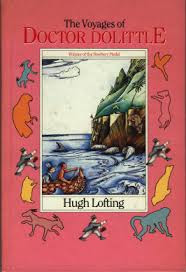
Voyages of Doctor Dolittle (1923) - 3 Stars - Easily the most recognizable title on this list - though primarily as part of a larger series. To date the only one from this list I've read twice.

Shen of the Sea (1926) - 4 Stars - Looking back I'd give this 3 stars, I liked it fine - but I didn't REALLY like it. Another anthology that I don't remember a lot about except that it reminded me of other old stories I like.

The Dark Frigate (1924) - 2 Stars - Sorry, but this is probably the biggest disappointment from all the Newbery books. One of my favorite books is Treasure Island and this book seemed like it would be in that vein - alas it wasn't.

The Story of Mankind (1922) - 2 Stars - I can't fault this book on concept and execution. But it is such a large undertaking that it was never going to work in a single novel length book.

Smoky, the Cowhorse (1927) - 2 Stars - Blech. Not only the worst of the decade but the worst of all the winners. 

Recommendation of the Decade:

If I were to recommend just one book from the decade it would easily be The Voyages of Doctor Dolittle. Though I rate it solidly in the middle of the pack I think it has a more enjoyable concept for kids than any of the other books. It also is the one most recognizable to the public because every few decades a movie comes out. Most animal loving kids often wish to talk to the animals and this book delivers. It definitely has the old-fashioned feel of things just sort of happening as the author thinks them up.


Thursday, January 14, 2021

Invincible Louisa, Newbery Winner 1934

 Do you know what this review represents? This is review number 99 out of... 99.

I

FINISHED

A

PROJECT!


More than six years ago I was stoked to reach number 50. But today... I don't know... in a few days the 100th Newbery winner will be announced and I will review it, then I will do the final round-up. I've been writing this blog for nine years, admittedly not very faithfully for a while. I'm well aware this blog is a personal project, pretty much just for me - but that somehow makes it even worse, and yet better, that I finished.

Without further ado...


Invincible Louisa, I'm so glad I didn't finish with a dud. Probably the best of the biographies that won Newberys - though I'd have to double-check. Before I read this book there was one other point that needed clearing up. Little Women. You just can't read a biography of Louisa May Alcott without having ever read Little Women. That's why this kept getting pushed. I just was certain that Little Women would absolutely not be my cup of tea. Whelp... I was incorrect. Little Women 5/5 stars - everyone that says it is a great classic is right.

Going straight from Little Women (759 pages) to Invincible Louisa (240 pages) is like reading an incredibly condensed and slightly twisted rewrite. Louisa based Little Women very heavily off her own life - especially herself and her sisters compared with the March sisters. Louisa certainly had to be invincible - her life was so fascinating! Anyone notice famous people run in packs? Louisa grew up around the likes of Thoreau and Emerson. Her father was very into the transcendentalist movement and was - in many ways - ahead of his time. Unfortunately that doesn't always translate very well into livable income. Louisa was often finding ways to help her family earn money and promised to one day find a way to give them all what they most desired.

Overall - an excellent biography (which I hope is mostly true) because then it is a historical fiction... This best parts are when you don't know what will happen because it veers so far from her fictionalized life as Jo March. All in all I'd recommend this easily to anyone but especially to fans of Little Women!

Wednesday, January 13, 2021

Waterless Mountain, Newbery Winner 1932


I think that the best way to describe this book might be the old adage: "The road to Hell is paved with good intentions."

We are playing fast and close to that line of writing about Native American cultures when you have very little to do with said culture. Two other winners that pop to mind are Island of the Blue Dolphins and Julie of the Wolves. I personally enjoyed those stories and researching them I can see that there are many issues - but they also get away with several things by virtue of being survival stories and not the stories of day to day living within the culture. Waterless Mountain doesn't have this factor going for it. My research indicated that, although the text says Navaho (the spelling used by Armer), several descriptions are actually Pueblo. I can in no way figure out what is what though and the online resources for a 1930s children's book that was out of print for decades are just not very thorough. 

What I really would like to say is that Laura Adams Armer seemed like she wanted to be respectful to Navajo people, and for the 1930s appeared to have done a good job. She comes off a little patronizing on a handful of occasions but she avoids both condescending stereotypes and the noble savage stereotype. Personally I'm stuck as to how to judge her on this area.

The area I'm not afraid to pass judgements is the story. It is pretty episodic, like many of these early Newbery Winners. But most of these episodes do nothing for me. I found the story to be pretty dry. It seems like the 30s just aren't my cup of tea. In a few weeks I plan to do a complete ranking of all the decades since the Newbery began - I'm guessing the 30s will either place dead last or second to last.

Thursday, December 24, 2020

Roller Skates, Newbery 1937


 This book was... okaaaaay... I've seen a few reviews from people that have read more of Ruth Sawyer's books and they seem to agree that this is not her best work. In this very episodic story 10 year old  Lucinda is left with some family friends in NYC while her parents spend a year in Italy. We are given a lovely setting filled with a variety of characters - perhaps too many characters. I liked all of them but none was quite fleshed out to their fullest potential because we had to bounce around between more than 20 side characters in a 200 page novel. And there were three lousy conclusions - I'm gonna drop what would be a major spoiler in any other novel - you've been warned....


A) One of Lucinda's many friends, an East Asian woman referred to by Lucinda as Princess Zayda is murdered

B) Tony and Luc- you're still thinking about point A aren't you?

Yep, murder. It is hinted that domestic abuse is involved but I'm not sure I'd have picked up on that subtext as a child reader. Lucinda begins visiting this woman frequently and once the woman's husband angrily comes home but seems relieved to find Lucinda instead of another man. Lucinda is so afraid she runs away. Over the novel Lucinda gives the woman English lessons and drops in to visit her frequently. After being dismissed early from school one day she decides to surprise her friend and goes to her apartment - where she discovers that she has been stabbed with a dagger that is still in her body! Lucinda quickly summons the landlord who says that it wouldn't do for Lucinda to be involved with the police so they will wait until the maid discovers the body and the whole thing is never really mentioned again??? I cannot fathom why this was put in the book only to be dismissed so completely. I saw a couple people mention that this book is loosely autobiographical... did... did little Ruth discover a murder victim?

Moving on.

B) Tony and Lucinda have the worst possible conclusion. Theirs is probably the strongest relationship in the book and it is so completely wasted at the end. (When hearing there was a sequel I was sure we were in for more Tony and Lucinda but.... guess not since the sequel is in Maine.) These two have been really happy and helpful friends throughout the book but they just kind of part without any good bye and that is partly due to....

C) The book just ends. I can see how the abrupt ending of Lucinda looking to the reservoir and asking her reflection if she'd like to always be 10 and stay forever in the park led Peter Sieruta, a blogger and book reviewer with far more credentials than I, to assume the book ended with her suicide. The book feels like the last several pages managed to get lost!

Monday, December 21, 2020

Gay-Neck: The Story of a Pigeon, Newbery Winner 1928

I had put this book off for so long because I very much expected not to like it. That is really the case with all three of my remaining Newberys. However I was so surprised! I loved this book and gave it the coveted five star rating on Goodreads - something I've gotten stingier with over time. I thought I'd check how the average user ranks it among the Newbery winners (of which there are 99 at time of writing)

98. Gay-Neck 3.30

99. Dobry 3.26


Many years ago I mentioned that I wasn't a horse girl. But as I was reading Gay-Neck I realized I was definitely a bird girl. I can take or leave horse books. Most cat books are not my thing. Dog books tend to be pretty good. But bird books? I'm racking my brain and I've never met a bird book I didn't like!

This novel is a great look at an upper caste life in late 1800s India, it is actually an own-voices novel which is not something I'd ever stumbled across for this particular time and place. Rudyard Kipling is one of my favorite writers - but I'll be the first to admit that his view is problematic when it comes to colonialism (imperialism?). Back to Dhan Gopal Mukerji, he immigrated to the US in his early 20s where he quickly became interested in many social movements and took to writing to support himself and his education. He became a very popular children's author - and in 1928 was awarded the Newbery. Apparently at the awards dinner he was seated in an inconspicuous place as the committee wanted the award to be a surprise; this was the first time an author of color won the Newbery and they were afraid his presence would be a giveaway before the announcement. Sadly, his fame may have contributed to anxiety and fatigue leading to Mukerji's suicide at the age of 46.

The plot of the book is two-fold. First it focuses on the raising and life in India of homing pigeons. The first-person narrator (perhaps loosely based on the author) raises pigeons in Calcutta, he introduces the text: "For a pigeon, life is a repetition of two incidents: namely a quest of food and avoidance of attacks by its enemies." Several times Gay-Neck is attacked and occasionally injured. After these attacks he must not only be physically healed but mentally, emotionally, perhaps even spiritually. On a couple occasions we are allowed to understand where Gay-Neck has been through his own first person narration.

At the mid-point of the book Gay-Neck is sent with a friend of the narrator to World War I in France. This book predates World War II so simply refers to 'a war in Europe'. The text manages to convey some horror of war while also maintaining itself as a text for children. Eventually Gay-Neck is released from the war suffering what we would come to refer to years later as PTSD. Through time and patience he is once again well enough to fly.

Mukerji leaves us with a text that emphasizes not only courage, but love and understanding. He used the story of a pigeon to illustrate the human condition - saying that fear is the root of our problems. He had been impacted and saddened by WWI, turmoil in his native India, and social struggles in the USA. The final line of the book offers his hope for the world - "Peace be unto all!"


As a side note the narrator is so moved by the sight of Everest at one point that he says, "O thou summit of sanctity, thou inviolate and eternal, may no man tarnish thee, nor may any mortal stain they purity even by his slightest touch. May thou remain forever unvanquished, O thou backbone of the universe, and measurement of immortality." I looked it up and was happy to find that Everest was not summited until 1953, several years after the author's death.